



Article by
Kim Davis
Kim Davis is the founder and designer of Grace Blooms Jewelry and Roma Designer Jewelry.
For nearly two decades, Kim has been a tireless advocate for jewelry solutions focused on ease of use. Her own struggles with finger dexterity and pain make this a cause near and dear to her heart.
With millions of adjustable chains sold to happy customers around the world, Kim has become one of the world's foremost experts on jewelry focused on ease of use and accessibility.
A bracelet should be easy to put on without adding pressure or rubbing when your wrist is uncomfortable. For adaptive jewelry for carpal tunnel, look for a fastening method your hands can manage. If you wear a wrist brace, leave that wrist free of bracelets or wear one on the opposite wrist. Remove jewelry if it presses, rubs, or becomes difficult to take off, and remove bracelets before bed when wearing a brace.
A tiny clasp can be frustrating when your fingers aren’t cooperating. An easier fastening option can make getting dressed more manageable, while knowing when to remove jewelry can help you avoid extra discomfort.
This guide covers bracelet fastening tools, when to leave jewelry off at night or during a flare-up, and design features that can make jewelry easier to handle. It also explains how adjustable jewelry fits in, so you can choose what works for your hands and routine.
Key Takeaways
- Try a bracelet fastening tool to help steady the clasp while your other hand works it closed.
- If you wear a wrist brace, keep jewelry off that wrist or wear it on the opposite wrist.
- Remove bracelets before bed when wearing a brace, and take jewelry off if it presses, rubs, or becomes hard to remove.
- Look for jewelry with fastening and adjustment features you can manage comfortably on your own.
- Choose jewelry that feels comfortable during your usual activities, and leave it off when it adds pressure or irritation.
1. Bracelet fastening tools for carpal tunnel syndrome
For alternatives to adaptive jewelry, consider a wrist brace, changes to repetitive tasks, and medical guidance for ongoing symptoms. Carpal tunnel syndrome involves pressure on the median nerve and can cause tingling, numbness, weakness, or discomfort. A bracelet fastening tool can steady a clasp, but it doesn’t treat those symptoms. Think of it as a way to manage a jewelry task, not a substitute for care.
A bracelet helper can hold a bracelet steady while you work the clasp with your other hand. Jewelry-making versions commonly have one or two clamps or clips, sometimes with a magnifying glass. Set the bracelet in the clamp, position the clasp where you can see it, then connect the ends with your free hand. This reduces the need to hold the bracelet and clasp at once.
Try the tool with a bracelet whose clasp you can grip comfortably. Keep the jewelry steady, but don’t force a clasp that catches or requires painful pressure. A fastening aid may make the steps easier, but it won’t relieve nerve pressure or prevent symptoms. Stop if the tool or bracelet presses, rubs, or makes your wrist uncomfortable.
Copper bracelets are sometimes promoted for carpal tunnel, but don’t rely on copper jewelry to manage symptoms. A copper bracelet can still rub, press, or interfere with a wrist brace. Choose one for appearance only if it feels comfortable, and remove it if it irritates your skin. Keep symptom management separate from your choice of metal or clasp.
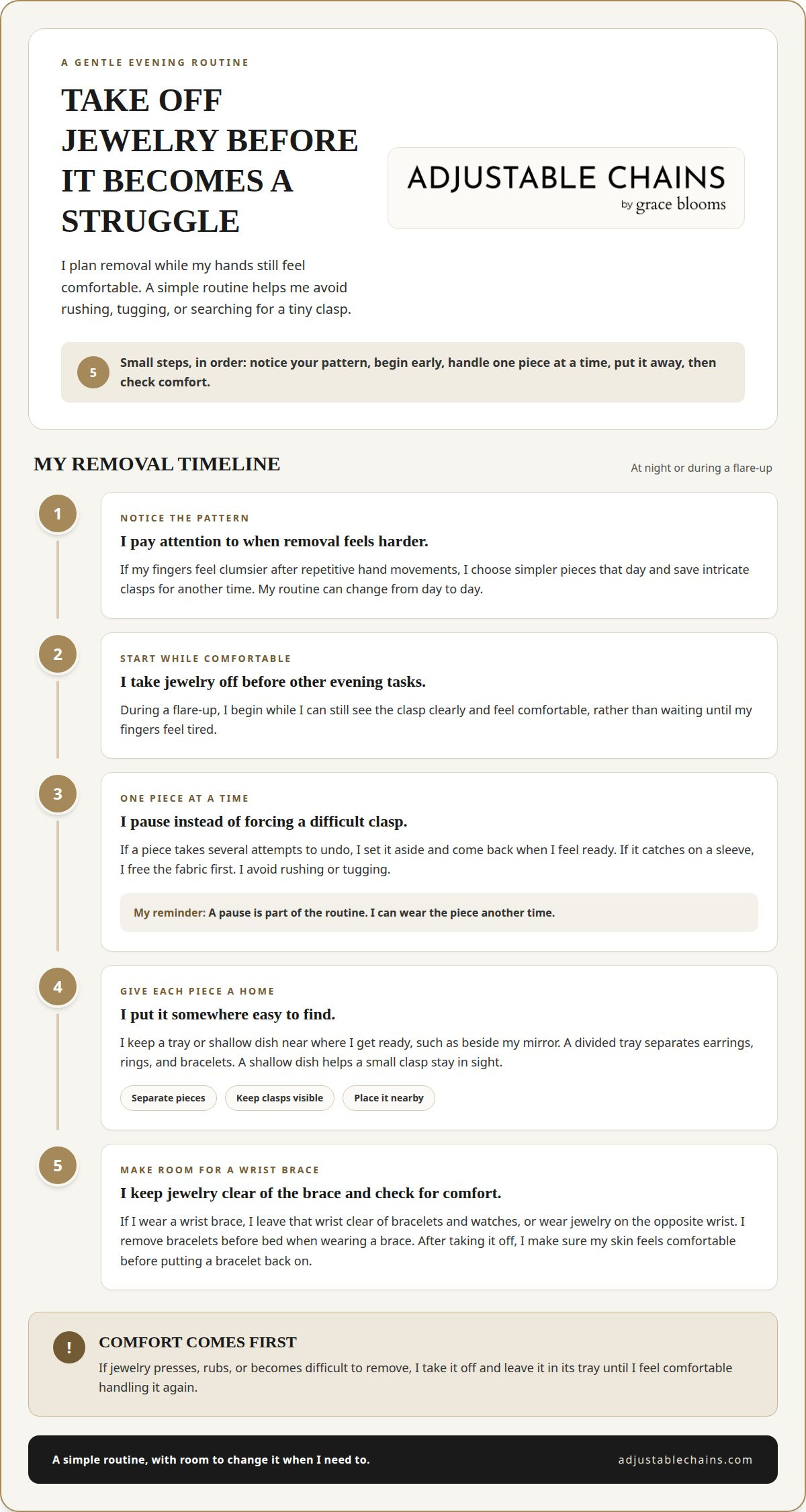
If you wear a wrist brace, leave that wrist clear of bracelets and watches, or wear jewelry on the opposite wrist. Jewelry beneath or against a brace can create pressure or rubbing. Before putting the brace on, remove anything that sits in its path. After taking the brace off, make sure your skin feels comfortable before putting a bracelet back on.
Build a simple routine around your brace. Remove bracelets and watches before bed when you’re wearing one. During a flare-up, take off any jewelry that presses, rubs, or becomes difficult to remove. Put it somewhere visible, such as a small dish beside your jewelry box, so it’s easy to find when you’re ready to wear it again. A clasp tool can help with fastening later, but comfort comes first.
2. Jewelry removal at night and during flare-ups
Carpal tunnel symptoms can be more noticeable at night or after repetitive movements. Use those patterns to plan when jewelry comes off, rather than waiting until your fingers feel tired. If a flare begins after an activity, pause your jewelry routine and choose an option that takes less handling. You can wear the piece another time.
Give each piece a home before taking it off. A divided jewelry tray keeps earrings, rings, and bracelets separate, while a shallow dish makes a small clasp easier to spot. Place the tray where you usually get ready, such as beside your mirror. Then you won’t need to search through a jewelry box when your hands are uncomfortable.
Make removal less fiddly by sorting pieces according to how they open. Keep a necklace with a simple clasp separate from a bracelet with a tiny fastener. If a piece takes several attempts to undo, set it aside and come back when you feel ready. Handling one piece at a time is easier than juggling jewelry while getting ready for bed.
During a flare-up, change the order of your routine. Take off jewelry before starting other evening tasks, while you’re still comfortable and can see the clasp clearly. If a piece catches on a sleeve, stop and free the fabric before moving the jewelry. Avoid rushing or tugging. A pause can keep a small snag from turning into a frustrating struggle.
Notice whether the same time or activity makes removal harder. For example, if your fingers feel clumsier after repetitive hand movements, choose simple pieces that day and save intricate clasps for another occasion. A brief calendar note can help you spot patterns without making jewelry a chore. Your routine can change from day to day.
Constant or worsening symptoms, or symptoms accompanied by loss of feeling, deserve attention beyond a jewelry adjustment. Jewelry can’t diagnose or treat carpal tunnel. During a flare, focus on what feels manageable and leave a difficult piece in its tray until you’re comfortable handling it. This lets you enjoy your collection without forcing a particular routine.
3. What features make bracelets, necklaces, and rings easier to put on with limited hand mobility?
Start with the fastening motion you find hardest. If pinching a tiny clasp is the problem, look for a closure that joins with a simple movement. If reaching behind your neck is uncomfortable, a necklace you can put on without opening its clasp may suit you better. Choose a feature that addresses the specific task your hands struggle with.
Magnetic clasps connect at their ends, so you don’t have to grasp and manipulate a small clasp. A magnetic clasp converter can add this kind of connection to compatible jewelry. Bring the two ends together and let them connect, rather than trying to align a tiny clasp opening. A magnetic clasp converter is one option to consider. If you have a pacemaker or an ICD, choose an adjustable chain you can slip over your head instead; magnets can interfere with implanted cardiac devices.
For necklaces, consider how you’ll get the piece on and where it will sit. Chains 24 inches and longer can slip over your head with the lobster clasp closed, then adjust to 14, 16, 18, or 20 inches. That avoids fastening behind your neck when dressing. Some necklaces may still need to be fastened around your neck, so consider whether you can manage the clasp.
An adjustable necklace extender can change the fit of a necklace you already own. It may help if you can reach the clasp but find the necklace too short or awkwardly placed. Lay the necklace on a table, attach the extender, and check that the new length feels comfortable before wearing it. An extender changes the length, not the clasp mechanism.
For rings, a stretchy silicone style can accommodate finger swelling. Its soft, flexible material may be easier to slide on than a rigid band. Choose a fit that stays comfortable as your finger moves, and remove the ring if it becomes tight or difficult to take off. Flexibility can make a ring easier to put on, but it doesn’t address wrist symptoms.
Bracelets need a different fit check. Look for a fastening motion you can complete without pressing the bracelet into your wrist or sharply bending your fingers. Rest your forearm on a table, bring the ends into view, and try closing the bracelet slowly. If you need to pull hard or twist your wrist, choose another style or use a fastening aid.
Consider a real dressing scenario before choosing. If you wear a wrist brace, a necklace that slips over your head avoids adding a bracelet to that wrist. If you want wrist jewelry, try a style you can secure and remove without pressure. Match each design feature to a specific movement, then choose the piece you can manage comfortably on your own.
4. What are the best adaptive jewelry brands and products for carpal tunnel in the US?
There isn’t one best jewelry choice for everyone. Start with the task you want to make easier, then compare pieces by how you’ll handle them. A bracelet, necklace, or ring addresses a different dressing challenge. Look for clear product photos and descriptions showing how each piece opens, adjusts, and sits when worn.
When shopping for a bracelet, focus on the fastening motion. Can you hold it steady while connecting its ends, and does its shape stay comfortable as your wrist moves? A bracelet that looks simple in a photo may still have a small closure. Product details should make clear what your fingers will need to do.
Compare necklaces by how they go on and how their length changes. An adjustable design may suit you if you like choosing where a necklace rests with different outfits. Look for a clear explanation of the adjustment mechanism, then consider whether you can manage it comfortably. The goal is a feature you’ll use, not extra complexity.
For rings, focus on how the fit feels throughout the day. A flexible material such as silicone can accommodate finger swelling, while a rigid band keeps its shape. Consider which feels more comfortable as your fingers move. If you’re choosing a ring as a gift, prioritize a forgiving fit rather than relying on a precise size guess.
Compare practical details instead of broad product labels. Read the description for the closure type, adjustment method, and care instructions. Picture a typical dressing moment, such as putting on a bracelet before leaving home or choosing a necklace to wear with a favorite blouse. A good match should make that specific moment simpler.
Be cautious of product language promising symptom relief. Jewelry may make fastening or wearing an accessory more convenient, but it doesn’t replace care for carpal tunnel. Keep style and health decisions separate. Choose a piece for its fit, comfort, and manageable fastening, and discuss persistent symptoms with a qualified medical professional.
A practical shortlist might include a bracelet you can fasten comfortably, an adjustable necklace with a mechanism you can manage, or a flexible ring that feels good on your finger. Compare how you’ll handle each piece. The right choice is the one that fits your preferences and routine, not a product described as universally best.
5. How to choose and safely wear adaptive jewelry with carpal tunnel syndrome?
Start by matching jewelry to your actual routine. Think about the clothes you wear most, how often you change accessories, and which hand movements feel awkward. A necklace worn with a favorite blouse may need a different length from one worn over a sweater. Choose for those real moments, not appearance alone.
Check the design closely before wearing it. Look for rough edges, loose parts, or a clasp that catches on fabric. Run the piece gently between your fingers, then try it over a soft sleeve. If it snags, twists, or feels uncomfortable, set it aside and choose another style. A smooth fit matters while dressing and throughout the day.
Consider how much adjustment you want to make. An adjustment feature can offer styling choices, but its mechanism should feel clear and manageable. Try the movement while seated, with the jewelry supported on a table. Follow the maker’s instructions, holding the designated adjustment point rather than pulling on the ends. Stop if the motion feels difficult.
Consider skin comfort, too. If you’ve reacted to particular metals, read the material description and choose jewelry that suits your preferences. Wear a new piece for a short period first, then check for redness, itching, or irritation where it touches your skin. Remove it if your skin reacts, and don’t wear jewelry over irritated or broken skin.
Good care habits help keep jewelry comfortable to wear. Take pieces off before showering, bathing, or swimming, and avoid extended contact with lotions, sunscreen, makeup, and body oils. Dry jewelry with a soft cloth before putting it away. Store each piece separately so chains don’t tangle and small closures don’t catch on other items.
Keep your routine flexible. On a day when your hands don’t cooperate, choose a piece with a fastening motion you can manage, or skip jewelry altogether. Notice which designs feel comfortable during everyday movements, such as reaching for a cup or putting on a coat. These checks can help you make a personal choice without turning getting dressed into a test.
Blue, gray, pale, or cold fingers may indicate a circulation problem requiring urgent medical care. If a ring is stuck because of swelling, avoid pulling or twisting it and seek help from a medical professional.
Adjustable Chains by Grace Blooms: Accessibility Jewelry
Adjustable Chains by Grace Blooms offers accessibility jewelry for women who want jewelry that’s easier to manage on their own. Our adjustable chains can slip over your head with the clasp closed when they’re 24 inches or longer. Then slide the adjusting gasket to set the length. This can help if fastening a necklace behind your neck is the difficult part of getting dressed.
If you prefer wrist jewelry, adjustable bracelets offer a versatile option. Adjustable necklace extenders can change the fit of a necklace you already wear. These products suit different dressing preferences, so focus on the movement you want to make easier. Adjustable Chains by Grace Blooms offers adjustable bracelets and necklace extenders to help you find a practical fit for your routine.
Choose jewelry that fits your day
Your jewelry should feel like a welcome part of getting dressed. Let comfort guide what you wear, and give yourself room to change your routine when your hands need a simpler option. The best adaptive jewelry for carpal tunnel is a piece that suits your preferences and feels manageable to put on and take off. It can support your dressing routine, while medical care addresses symptoms.
Think of this as making room for the jewelry you love in ways that work for you now. You might choose an easy-to-wear piece for busy mornings and save a more delicate clasp for a time when you have help or more patience. Your style can stay personal while your routine stays practical.
Take the next step at your own pace. Choose what feels right for your hands and your day, and keep enjoying the pieces that make you feel like yourself.
Frequently Asked Questions
What is adaptive jewelry for people with carpal tunnel?
Adaptive jewelry for carpal tunnel means choosing jewelry that’s easier to handle, not a treatment for the condition. It may have a closure that’s easier to align, work with a bracelet fastening aid, or let you put on a necklace without reaching behind your neck. Choose based on the movement that feels difficult. The goal is to make dressing simpler while keeping the piece comfortable.
Can magnetic or compression jewelry relieve carpal tunnel symptoms?
No. A magnetic clasp can join jewelry ends without manipulating a tiny hook, but that convenience doesn’t establish symptom relief. Compression jewelry shouldn’t be treated as a way to reduce pressure on the median nerve. If a bracelet feels tight, presses against a brace, or rubs your skin, remove it, especially during a flare-up. Choose closures for ease and keep symptom care separate from jewelry.
What evidence supports jewelry or wearable devices for carpal tunnel relief?
Jewelry can make dressing easier, but it isn’t a treatment for carpal tunnel symptoms. A clasp changes how you fasten a piece; it doesn’t address pressure on the median nerve. Wearable items shouldn’t replace care for persistent numbness, weakness, or worsening discomfort. Judge a product by how easy it is to handle and how comfortable it feels, not by claims that it relieves nerve symptoms.
What adaptive jewelry closures are easiest to use with carpal tunnel?
Closures that require less pinching and precise alignment may be easier to manage. A magnetic connector brings two ends together, while a jewelry helper can hold a bracelet steady as you use its clasp. For necklaces, a chain that slips over your head can avoid fastening behind your neck, if its length allows. Choose the style that reduces your hardest movement, since one closure won’t suit every hand.
Could tight bracelets, rings, or magnetic jewelry worsen carpal tunnel symptoms?
A tight bracelet can press or rub and add discomfort, so take it off if that happens. A ring that becomes tight from swelling can be difficult to remove, though finger pressure differs from carpal tunnel nerve pressure at the wrist. Magnetic jewelry doesn’t treat carpal tunnel. Focus on a comfortable fit, and remove jewelry that catches, irritates your skin, or interferes with a brace.
Disclaimer
*About magnetic clasps: Magnets can interfere with implanted cardiac devices. If you have a pacemaker or an ICD, choose an adjustable chain that you can slip over your head rather than a magnetic clasp.


