



Article by
Kim Davis
Kim Davis is the founder and designer of Grace Blooms Jewelry and Roma Designer Jewelry.
For nearly two decades, Kim has been a tireless advocate for jewelry solutions focused on ease of use. Her own struggles with finger dexterity and pain make this a cause near and dear to her heart.
With millions of adjustable chains sold to happy customers around the world, Kim has become one of the world's foremost experts on jewelry focused on ease of use and accessibility.
A useful jewelry collection grows one thoughtful choice at a time. When I think about building a jewelry collection on a budget, I start with pieces that work for everyday outfits, then add special-occasion and trend pieces gradually.
It’s easy to feel you need a full jewelry box to get dressed with confidence. I’ve found that a few versatile favorites can do more than a pile of pieces you rarely wear. Start with styles that feel like you, suit your routine, and pair well with what you already own.
In this guide, I’ll show you how to balance classic designs with current trends, choose special-occasion jewelry you’ll wear again, and explore designer alternatives without making a label the whole point. I’ll also share a simple way to build your collection over time, so every new piece has a place and a purpose. Go at your own pace. Your jewelry box can reflect your style, not someone else’s checklist.
Key Takeaways
- Build around jewelry you’ll wear often, then add trends that genuinely fit your style.
- Choose special-occasion pieces that can also work with outfits you already own.
- Look beyond designer labels to find styles that suit your taste and spending plan.
- Add pieces gradually, giving each new purchase a clear purpose in your jewelry box.
- Set a starter budget by weighing how often you’ll wear a piece and how well it fits your needs.
1. Choosing classic versus trendy pieces
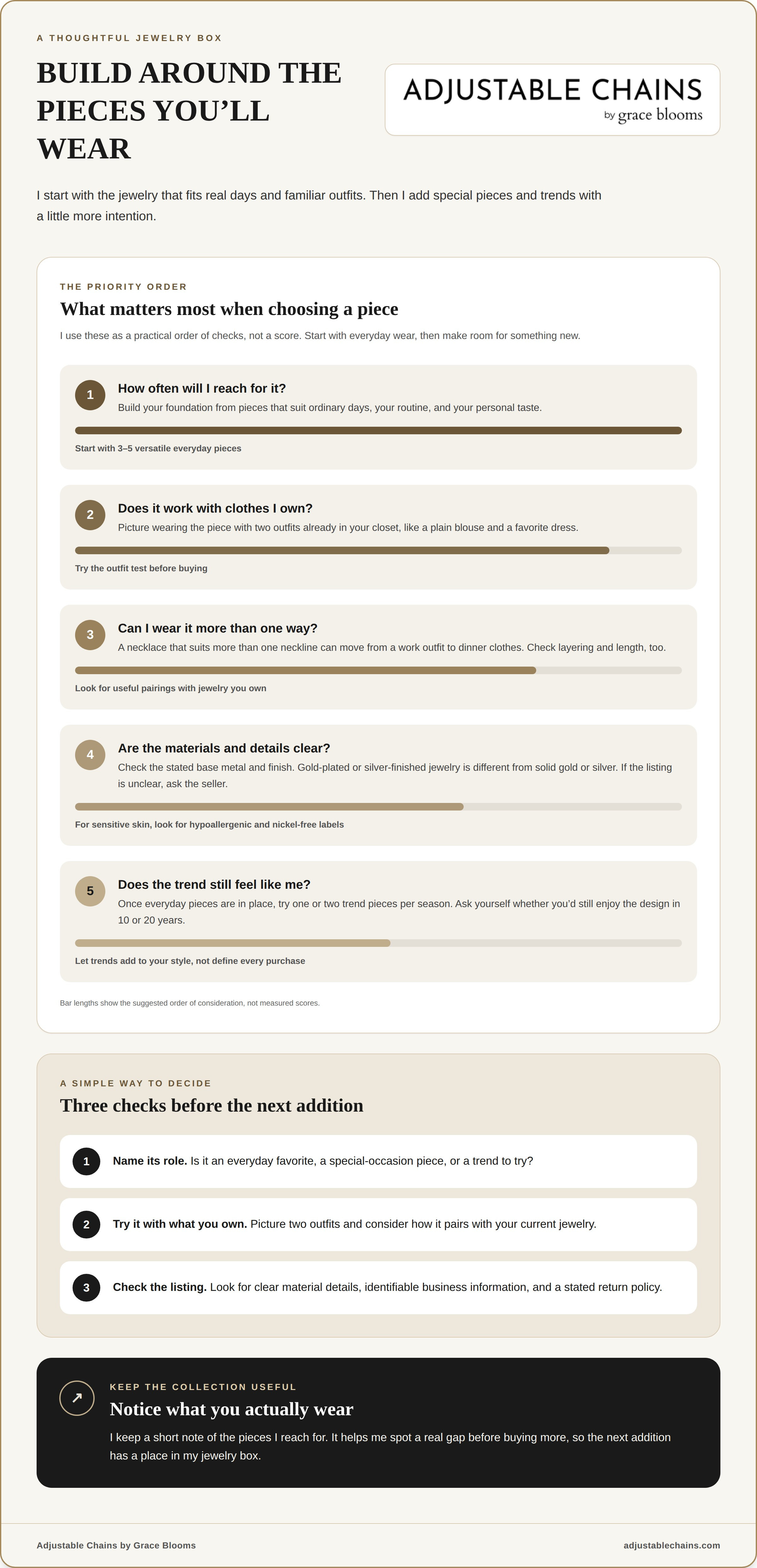
Start with the jewelry you reach for on ordinary days. Choose three to five pieces that suit your clothes, routine, and personal taste, such as silver studs, a simple necklace, or a bracelet that works with a watch. These versatile essentials give your jewelry box a useful foundation. For fine jewelry, consider comfort and how often you’ll wear each piece, not just how it looks in a display case.
Next, check whether a trend feels like you. Before buying, picture wearing it with two outfits you already own, such as a plain blouse and a favorite dress. I also ask myself whether I’d still enjoy the design in 10 or 20 years. Once your everyday pieces are in place, try one or two trend pieces per season. That keeps a changing style fun without making every purchase depend on what’s popular now.
Versatility comes from how a piece works with your existing jewelry. A necklace that suits more than one neckline, for example, can move between a work outfit and dinner clothes. Compare lengths and layering options before choosing; this necklace length guide can help you picture where different necklaces sit. For earrings, consider whether a small pair can stand alone or pair with other pieces you wear regularly.
Check the metal description before you buy. Look for the stated base metal and finish, and distinguish gold-plated or silver-finished jewelry from solid gold or silver. These descriptions refer to different materials, so don’t rely on a color name or product photo alone. If a listing is unclear, ask the seller to explain the exact metal composition before ordering.
To avoid counterfeit pieces and shopping scams, choose a seller with clear product descriptions, identifiable business details, and a stated return policy. Read the listing closely for the designer name, materials, and included documentation. Copied photos, inconsistent branding, or pressure to pay outside the usual checkout process are reasons to pause. Save the order confirmation and product description so you can refer to what was represented.
If your skin is sensitive, look for jewelry labeled hypoallergenic and nickel-free, then read the materials information rather than relying on a “silver” or “gold” color label. These terms describe appearance, not whether a piece contains a material that bothers your skin. Choose pieces you can wear comfortably through a regular day, and notice which materials work well for you.
A practical collection grows through repeat wear. Keep a short note of the pieces you reach for, such as silver studs for everyday errands or a necklace that layers well. This helps you spot gaps before buying more. Choose the next piece to fill one of them, and save trend experiments for designs that still suit your wardrobe.
2. Adding statement and special-occasion pieces
A special-occasion piece earns its place when it works beyond one event. Before choosing earrings for a wedding or a pendant for a celebration, picture at least two outfits you’d wear again. Bold earrings can bring focus to a simple dress, then add interest to a plain blouse. That repeat use matters more than choosing something that matches only one look.
Think about the occasion and how you’ll wear the piece. For a formal dinner, a pendant can add detail near the neckline without competing with patterned clothing. For a family celebration, earrings may be easier to pair with different necklines. If you wear both, let one design lead. Large earrings and a prominent pendant can compete, while one focal piece with simpler companions feels balanced.
Layering gives existing jewelry a fresh combination. Start with two necklaces of different lengths, then add a pendant to one if they sit comfortably together. For bracelets, mix a narrow chain with a familiar watch or simple cuff. Try the combination with your usual clothes before buying anything else. Notice whether chains tangle, clasps catch, or colors feel mismatched. These small tests help you choose pieces you’ll enjoy wearing.
Delicate jewelry can suit everyday outfits and special events, but check the construction before choosing. Examine links, clasps, settings, and earring backs for a secure finish. A fine chain with a small pendant may suit a light neckline, while a sturdier chain can balance a larger pendant. Store delicate pieces separately to prevent tangling with heavier jewelry, and remove them before activities that could pull or snag them.
For a distinctive look, choose a bold design that reflects your taste, such as sculptural earrings or a colorful pendant. Let that design set the tone, then keep other accessories quieter. You don’t need several dramatic pieces for one outfit. If you’re drawn to a trend, choose a version that works with clothes already in your closet rather than buying a whole new look around it.
Buy one quality piece at a time. First decide what role it fills, such as earrings for dressier occasions or a pendant that layers with a necklace you own. Then consider comfort, materials, and how often you expect to wear it. This measured approach makes each addition easier to evaluate and keeps your collection connected to your real routines.
If a pendant you own needs more styling flexibility, an adjustable chain can help you vary its position with different necklines.
3. Considering alternatives to designer brands
A designer name can add appeal, but it doesn’t determine whether a necklace suits your wardrobe. Compare the details that affect wear: metal, finish, clasp, setting, and how the piece pairs with clothes you own. A classic chain from a lesser-known maker may serve more outfits than a logo-forward design you’d rarely wear. Focus on construction and personal style, not the label alone.
There’s no single best affordable jewelry brand for everyone in the United States. Compare specific pieces across brands, looking for clear material descriptions, useful photos, and consistent product details. A simple necklace that layers with your current favorites may offer more practical value than a recognizable name that doesn’t suit your routine.
Read the metal description carefully before choosing. “Gold-colored” describes appearance, while “gold-plated” describes a finish over another metal; neither means solid gold. Look for the base metal and finish stated separately. If a listing is vague or contradictory, pause instead of assuming a photo proves the material. Clear descriptions make it easier to compare similar pieces fairly.
For a sale or secondhand find, compare the stated materials, condition, and return terms before buying. Inspect close-up photos of clasps, links, settings, and earring backs. For a designer item, compare its marks and packaging with reliable descriptions of that exact model. Avoid listings with copied-looking images, missing details, or pressure to pay outside the platform’s usual checkout.
Secondhand or vintage fine jewelry may be worth considering when the design, condition, and materials suit your needs. “Estate jewelry” simply means a piece had a previous owner; it doesn’t have to be antique or bought at an estate sale. A pre-owned classic necklace may offer a distinctive look, but wear, repairs, and missing parts affect its usefulness.
Water-resistant jewelry can sound convenient for everyday wear, but the label alone doesn’t explain what exposure a piece can handle. Read the seller’s care instructions for that item, and don’t assume the term means it’s suitable for a shower, pool, or ocean. If you want jewelry for frequent wear, consider how you’ll care for it and whether you’re comfortable removing it around water.
Lab-grown diamonds are another option to compare with natural diamonds. They’re physically and chemically identical to natural diamonds and just as durable. Scientists can create them within a few weeks to a few months. Compare the stone’s details and setting, then decide which option fits your priorities. The label alone doesn’t tell you how a ring or pendant will feel in your everyday wardrobe.
My simple test is to compare the piece, not just its brand: materials, construction, wearability, and care. This gives you a clearer basis for choosing a classic design, a secondhand find, or a lab-grown stone without paying for a name you don’t value.
4. Building a jewelry collection gradually
A jewelry box can take shape one thoughtful purchase at a time. I like to begin with a simple plan: choose the next piece based on what you wear, what you already own, and what feels missing. If you often wear a delicate necklace but rarely reach for bracelets, prioritize the gap you’ll notice in daily outfits. A plan keeps each addition connected to your real routine.
Start by keeping a short note for a few weeks. Write down the jewelry you reach for and the occasions when you wish you had another option. For example, you might wear the same earrings for errands and dinner but want a bracelet for work outfits. That pattern points to a practical next choice and helps separate a genuine need from a passing urge prompted by a trend.
Then decide what you’re comfortable setting aside for jewelry over time. Saving for a specific piece can make it easier to choose something you truly want, rather than buying several options that don’t work together. Keep the goal clear, such as a bracelet that pairs with your watch or an elegant necklace for family celebrations. If your plans change, adjust the goal instead of rushing into a purchase.
Before adding a piece, test how it fits with your existing wardrobe. Lay out an outfit you wear often, then try the jewelry alongside it. A bracelet should feel comfortable next to a watch, while a necklace should sit well with your favorite neckline. If the piece works with only one special outfit, consider whether that limited use makes it a priority now.
Care can also shape the order of your purchases. A delicate chain may need separate storage to prevent tangling, while a bracelet you wear often should be easy to put on and comfortable through the day. Think about where you’ll keep each new piece and how you’ll care for it. A simple jewelry box with separate spaces can help protect pieces from rubbing together.
When you’re ready for a bracelet that can adapt to different looks, consider an adjustable station bracelet. It can fill a specific gap while giving you another option for coordinating outfits. Choose the next addition only after you know how it’ll fit into your wardrobe.
Building gradually leaves room to learn your preferences. After each purchase, notice whether you wear the piece often, enjoy how it feels, and pair it with more than one outfit. Use those observations to guide your next choice. A collection built this way can grow at your pace, with every new piece earning its place in your jewelry box.
5. How much should you budget for a starter jewelry collection
There isn’t one starter budget that fits every jewelry lover. Set an amount you can spend comfortably, then decide which pieces matter most. For one person, that might mean everyday earrings and a necklace. Someone else may already own those and want a bracelet for work outfits. Your routine, preferred materials, and shopping pace shape the total.
Start with an amount you can set aside without affecting household essentials or other priorities. Then list the pieces you expect to wear often, such as studs, a necklace, and a bracelet. Separate items for daily outfits from special-occasion choices. This gives your budget a clear purpose before you browse and keeps a limited amount from being scattered across pieces that fill the same role.
Next, research the materials and construction in each category. Compare solid gold, sterling silver, and finished jewelry by reading product descriptions carefully. Material, finish, and care needs all affect your choice, so compare like with like. For earrings, check that the backs feel secure. For a necklace, inspect the clasp and chain links. These details help you judge whether a piece suits regular wear.
Think about value through use, not just the lowest price. Earrings worn often may serve you better than a less expensive pair that stays in its box. For example, if you wear silver studs to work and on weekends, they may be a stronger first purchase than occasion earrings you’ll rarely reach for. Consider comfort, versatility, and expected wear before deciding what deserves priority.
Build in stages. Choose one useful piece, wear it with outfits you already own, and notice what’s still missing. If you buy a necklace first, you might discover that earrings are your next priority, rather than another chain. Saving for a particular design can also help you avoid impulse purchases that don’t fit your wardrobe. Keep your spending limit in view, and wait until the piece and budget align.
A starter collection can begin with a few well-chosen pieces, then grow as your needs and preferences become clearer. You don’t have to buy every category at once. Include care and storage in your plan, too. A delicate chain may need its own space, while everyday earrings should be easy to find and comfortable to wear. Choose a budget that leaves room for thoughtful decisions, not pressure.
Adjustable Chains by Grace Blooms: Accessibility Jewelry
Adjustable Chains by Grace Blooms offers accessibility jewelry for women who want more ease and flexibility from the pieces they wear. If your hands don’t cooperate the way they used to, an adjustable chain can be easier to put on independently. Chains 24 inches and longer slip over your head with the standard clasp closed. Then slide the adjusting gasket to wear the chain at 14, 16, 18, or 20 inches. Shorter chains may be harder to put on over the head.
An adjustable chain can offer more flexibility than a fixed-length chain. Adjustable necklace extenders and bracelets offer other ways to adapt jewelry you wear regularly. Consider these options when you want a piece to work with different outfits or are looking for jewelry that’s simpler to put on by yourself.
Keep Your Jewelry Choices Personal
I find a jewelry box feels more useful when each piece reflects the person wearing it. Let your next choice come from a real moment in your day: getting dressed without help, wearing a favorite pendant, or finding a bracelet that feels comfortable. Those details can guide building a jewelry collection on a budget without turning it into a race to own more.
Give yourself room to change your mind. Your favorite colors, outfits, and routines may shift, so let your collection grow with them. A thoughtful purchase can be enough for now. Wear it, enjoy it, and see what you reach for next.
Choose at your own pace. Your jewelry box should feel like yours, one good decision at a time.
Frequently Asked Questions
How do I build a versatile jewelry capsule collection on a budget?
A practical approach to building a jewelry collection on a budget is to choose pieces that suit your clothes and routine, then add one item at a time. Start by picking a small color palette and noting which jewelry you reach for most. If you wear warm neutrals and gold-toned accessories, look for pieces that coordinate with those favorites. Keep a short list of gaps, such as earrings for dressier outfits, to keep browsing focused.
Which essential jewelry pieces should beginners buy first?
Begin with jewelry you’ll wear often, rather than following a fixed checklist. Comfortable everyday earrings may come first for one beginner; a necklace that works with several necklines may suit another. Choose one piece, wear it with different outfits, then decide what would complement it. That way, each purchase responds to your habits instead of duplicating something already in your jewelry box.
How do sterling silver, gold-plated, gold-filled, and stainless steel jewelry compare?
Sterling silver is a silver alloy, while gold-plated jewelry has a gold finish over a different base metal. Gold-filled jewelry has a layer of gold bonded to its base, and stainless steel jewelry uses a steel-based material. These terms describe different constructions, so compare the exact material and care instructions on each listing. If skin sensitivity matters to you, look for clear nickel information rather than relying on color or appearance.
What jewelry styles and colors are easiest to mix and match?
Simple shapes and colors already present in your wardrobe are easy starting points. Silver and gold can each coordinate with neutral clothes, while a small accent color can connect jewelry to a favorite scarf or blouse. As you build a jewelry collection on a budget, repeat a detail, such as a rounded shape in earrings and a pendant, to make different pieces feel related. Try combinations with your outfit before adding another color or style.
How should I care for gold-plated jewelry?
Keep gold-plated jewelry away from extended contact with moisture and liquid cosmetics. Remove it before showering, bathing, or swimming, then store it in an organizer or resealable bag. For example, take off a necklace before applying lotion or perfume, and let your skin dry before putting it back on. These small care habits help protect the finish during regular wear.
What should I consider when choosing jewelry as a gift?
Start with the recipient’s everyday style and the jewelry they already wear. Notice whether they favor silver or gold tones, small earrings or larger designs, and simple necklaces or pendants. If you’re unsure about a specific style, a versatile piece may be easier to pair with their existing wardrobe. Consider comfort and ease of putting it on, too, so the gift suits how they like to wear jewelry.
Best affordable jewelry brands in the United States
There’s no single best affordable jewelry brand for everyone in the United States. Compare specific pieces by their material descriptions, photos, product details, and how well they fit your style and routine.
Disclaimer
*About magnetic clasps: Magnets can interfere with implanted cardiac devices. If you have a pacemaker or an ICD, choose an adjustable chain that you can slip over your head rather than a magnetic clasp.


